Mon-Sun 8: 00-21: 00
+38 (067) 410 83 29

Pain in the upper back

"Spine Ambulatory" guarantees elimination pain symptomatology and the effects of the disease under conditions of treatment.

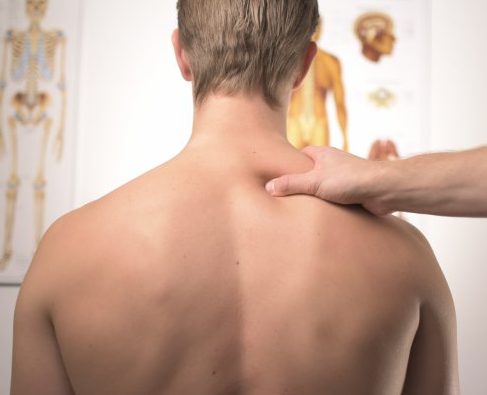
Upper back pain is a common condition affecting people who spend long hours working at a computer, driving. Or performing repetitive physical activities. Pain may occur between the shoulder blades, in the thoracic spine, and may radiate to the neck, shoulders, or arms.

Common causes include poor posture, prolonged static loading, muscular imbalances, degenerative spinal conditions, disc protrusions and herniations, as well as disorders affecting the joints, ligaments, and surrounding soft tissues.

Successful treatment requires more than simply relieving symptoms. Identifying the underlying cause of pain is essential for achieving long-term results. At Spine Ambulatory Centers, comprehensive assessment and functional examination help develop individualized rehabilitation programs aimed at restoring spinal function, improving posture, and reducing pain.

Symptoms of Upper Back Pain

Upper back pain info - Spine Ambulatory, 2026

Upper back pain can present in different ways depending on its underlying cause. For some people, it is a mild discomfort after a long day, while for others it can significantly limit mobility and daily activities.

Common symptoms include:

  • pain between the shoulder blades;
  • stiffness or tightness in the upper back;
  • aching, burning, or tingling sensations in the thoracic spine;
  • pain that worsens after prolonged sitting or computer work;
  • discomfort during twisting or bending movements;
  • pain radiating to the neck, shoulders, or arms;
  • fatigue and heaviness in the upper back muscles;
  • localized tenderness between the shoulder blades;
  • reduced mobility of the thoracic spine;
  • frequent need to change body position due to discomfort.

In some cases, upper back pain may be accompanied by headaches, dizziness, numbness in the arms, or weakness in the shoulder girdle. These symptoms may indicate involvement of nerve structures or a combination of thoracic and cervical spine disorders.

If symptoms persist for several weeks, become more severe, or interfere with daily life, a medical evaluation is recommended to identify the underlying cause and determine the most appropriate treatment plan.

    Didn't find the right information?

    Have a consultation call from a doctor

    Diagnosis of Upper Back Pain

    Accurate diagnosis is essential for effective treatment of upper back pain. Similar symptoms may result from muscle strain, poor posture, disorders of the thoracic or cervical spine, or conditions affecting the joints, ligaments, and surrounding soft tissues.

    Diagnosis typically includes:

    Medical Consultation

    During the consultation, the physician evaluates:

    • the location and nature of pain;
    • duration of symptoms;
    • factors that aggravate or relieve discomfort;
    • previous injuries and medical conditions;
    • lifestyle and occupational demands.

    Functional Assessment

    Functional examination helps assess:

    • posture;
    • mobility of the thoracic and cervical spine;
    • movement symmetry;
    • muscle strength and endurance;
    • spinal stability;
    • muscular imbalances.

    Functional testing often reveals the underlying cause of pain even when imaging findings are minimal.

    Neurological Examination

    When necessary, the physician evaluates:

    • reflexes;
    • sensation;
    • muscle strength;
    • signs of nerve irritation or compression.

    Diagnostic Imaging

    Additional imaging studies may be recommended when clinically indicated:

    • X-ray;
    • Magnetic Resonance Imaging (MRI);
    • Computed Tomography (CT);
    • Ultrasound examination of soft tissues and joints.

    MRI is not always required for upper back pain and is typically prescribed only when further clarification is needed or when significant structural abnormalities are suspected.

    A comprehensive assessment allows specialists to identify the source of pain and develop an individualized rehabilitation program aimed at restoring spinal function and improving posture.

    Treatment of Upper Back Pain

    Treatment of upper back pain depends on the underlying cause, the duration of symptoms, and the degree of functional impairment. The primary goal is not only to relieve pain but also to restore normal function of the spine, joints, muscles, and posture.

    In most cases, effective treatment requires a comprehensive approach.

    Eliminating Factors That Overload the Spine

    An important step is identifying and correcting factors that place excessive stress on the thoracic and cervical spine, including:

    • poor posture;
    • prolonged sitting;
    • insufficient physical activity;
    • muscular imbalances;
    • improper movement patterns;
    • occupational strain.

    Restoring Muscular Support

    Weakness of the deep spinal and shoulder girdle muscles often contributes to excessive loading of the joints, ligaments, and intervertebral discs.

    Rehabilitation may include:

    • individualized exercise programs;
    • Restorative Kinesiotherapy (RKT);
    • thoracic mobility exercises;
    • spinal stabilization training;
    • movement pattern correction.

    Therapeutic Massage

    Comprehensive therapeutic massage may help:

    • reduce muscle tension;
    • improve circulation;
    • enhance tissue mobility;
    • relieve discomfort between the shoulder blades;
    • support recovery.

    Restoring Spinal Function and Posture

    At Ambulatoria Spine Centers, comprehensive rehabilitation programs may include:

    • MHC (Medical Health Complex);
    • Restorative Kinesiotherapy (RKT);
    • Therapeutic Massage;
    • Physiotherapy modalities when indicated.

    These programs are designed to restore spinal function and posture, improve thoracic mobility, reduce stress on the joints and intervertebral discs, and develop healthy movement patterns.

    When Should You See a Doctor?

    Medical evaluation is recommended if upper back pain persists for several weeks, recurs frequently, worsens with movement, or is accompanied by numbness, weakness in the arms, or other neurological symptoms.

    Early diagnosis and an individualized treatment program can help address the underlying cause of pain, restore spinal function, and improve quality of life.

    Stories of recovery

    Neck pain

    Patient History Andriy came with pain in the cervical department, which gave in his left hand and increased with the movements of the hand. The numbness of the fingers and the headache at night were a...

    Vegetative vascular dystonia

    Patient History Diana came with complaints of dizziness, a headache. There was a discomfort in the heart, a state of anxiety. Sleep disturbance, general weakness. ...

    Scoliosis in a child

    Patient History: Dmitry needed to correct distortion of the spine and relieve neck pain.     ...

    Intercostal neuralgia

    Patient History: Julia, 45 years old, complained of a strong pain below the right shoulder blade, which was healed on the right side of the chest and intensified during deep breathing, with his hands ...

    Myofascial syndrome

    Patient History: Olga, 28 years old – suffered from aching pain in the lumbar, limitation of mobility in the lumbar spine. Bil was significantly increased during the wearing of a small child in ...

    Poor posture

    Patient History: Sergei, 28 years old – complained of heaviness and pain in the shoulders and neck, rapid fatigue at the beginning of the day, dizziness. There was a stiffness. ...

    Radiculopathy

    Patient History Vladimir, 65 years old – came with a strong backache in the right leg. There was a numbness of the thigh, legs, and feet in the right leg, and in the left leg it was weakness. Al...

    Correction of posture

    Patient History   Sergey V. came to the primary consultation in our center with complaints of abnormal posture and periodic pulling pain in the shoulders and neck. In spite of a very active lifes...

    Intervertebral hernia

    Patient History Anatoliy Mikhailovich, 59 years old, came to the Center on the recommendation of the daughter of Alexandra, who has already undergone a course on the restoration of the spine. Alexande...

    Back pain

    Patient History Anatoly turned to the “Spine Ambulatory” for correction of posture. Scoliostic posture was formed as a result of the “sedentary” way of life. The work of the pr...

    Office is the reason of bad posture

    Patient History Lilia (36 years old) came to the consultation in the “Spine Ambulatory” with pictures of MRI of the lumbar department, where spondylosis, intervertebral hernias of the spin...

    Special offer

    Discount %

    Only days, until 23.08.2026

    *

    This site is for educational purposes only; no information is intended or implied to be a substitute for professional medical advice.


    Our Centers on the map of Kiev:    Obolon - go     Pozniaky - go     Teremky-2 - go