
 +38 (067) 734 90 44 - Poznjaki +38 (067) 410 83 29 - Obolon +38 (098) 077 04 47 - Teremki
  Mon-Sun 8: 00-21: 00Mon-Sun 8: 00-21: 00
 +38 (067) 410 83 29


Intercostal Neuralgia
Запись на консультацию

About the Condition
Intercostal neuralgia is a pain syndrome caused by irritation, compression, or functional overload of the intercostal nerves in the thoracic spine and chest region.
Pain is most commonly localized:
- between the ribs
- in the thoracic spine area
- under the shoulder blade
- along the side of the chest
In some cases, symptoms may mimic:
- cardiac pain
- chest discomfort
- shortness of breath
- pain during breathing
For this reason, timely evaluation is important when pain becomes severe or unusual.
Pain associated with intercostal neuralgia often worsens during:
- deep breathing
- coughing
- trunk rotation
- bending
- physical activity
- prolonged sitting
- static posture
In many cases, intercostal neuralgia is associated not only with nerve irritation, but also with:
- muscular tension
- restricted thoracic mobility
- posture dysfunction
- chest wall overload
- impaired breathing mechanics
- degenerative thoracic spine changes
Symptoms may also include:
- muscular spasm
- stiffness
- burning or tingling sensations
- pain between the shoulder blades
- increased sensitivity along the ribs
- discomfort during movement or breathing
In some cases, people unconsciously begin to limit breathing movements because of pain, which may further affect chest mobility and muscular balance.
It is important to understand that intercostal neuralgia is not a separate disease, but rather a manifestation of functional or structural changes affecting the thoracic spine and surrounding tissues.
For this reason, identifying the cause of symptoms may require:
- clinical evaluation
- functional assessment
- thoracic mobility analysis
- breathing mechanics assessment
- imaging studies when necessary.
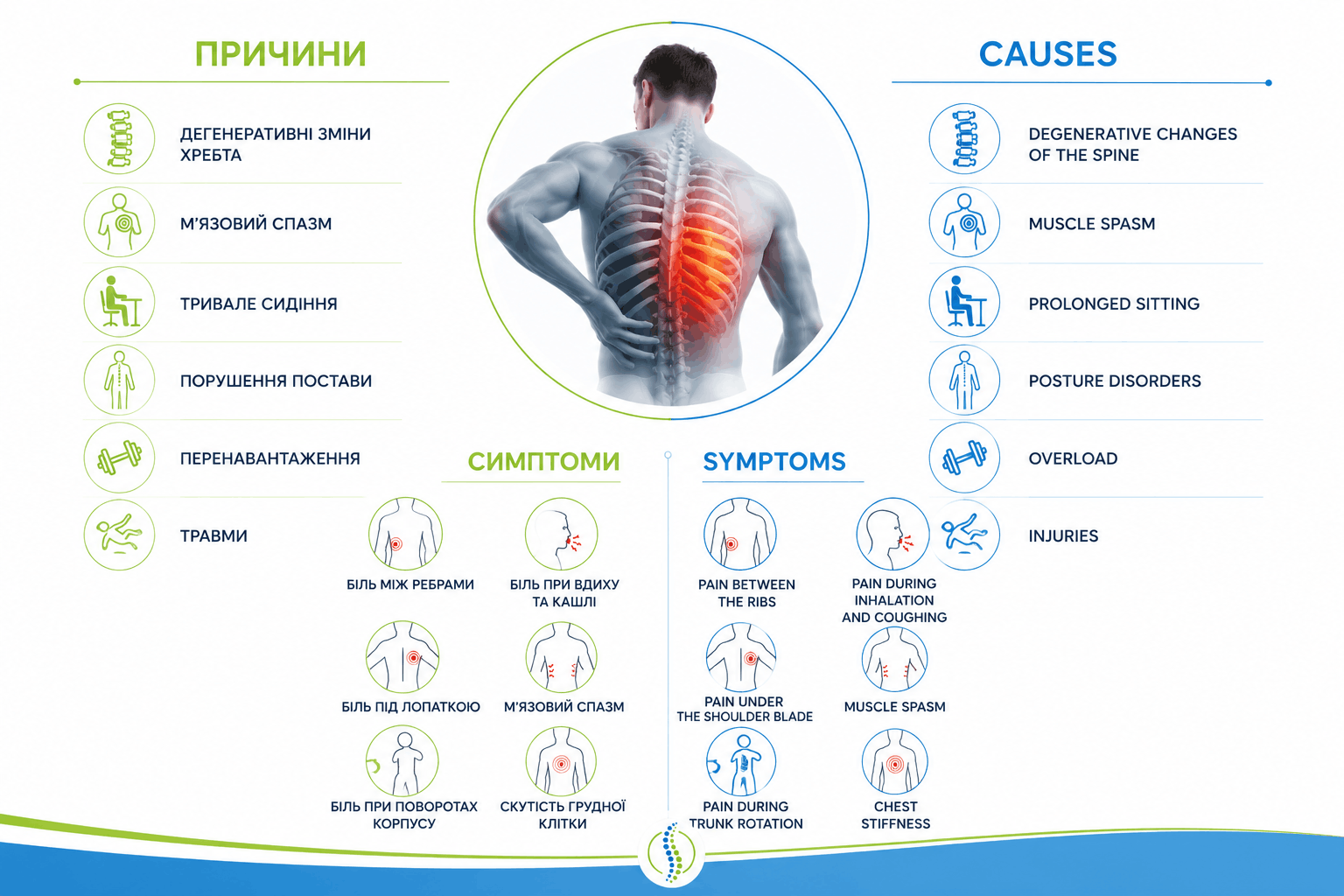
Causes and Symptoms of Intercostal Neuralgia
Intercostal neuralgia develops due to irritation or compression of the intercostal nerves, as well as functional overload of the thoracic spine and surrounding muscular and ligament structures.
In many cases, the condition develops gradually because of:
- prolonged sitting
- sedentary lifestyle
- posture dysfunction
- muscle imbalance
- restricted thoracic mobility
- overload of spinal and chest muscles
Possible causes include:
- degenerative thoracic spine changes
- osteochondrosis
- disc protrusions or herniations
- muscular spasm
- impaired movement biomechanics
- sudden physical overload
- chest or spinal injuries
- prolonged static loading
- insufficient physical activity
In some cases, symptoms may appear after:
- hypothermia
- prolonged coughing
- sudden trunk rotation
- unusual physical activity
Main Symptoms
Intercostal neuralgia most commonly presents with:
- sharp or burning pain between the ribs
- thoracic spine pain
- pain under the shoulder blade
- discomfort along the side of the chest
- pain worsening during deep breathing
- pain during coughing or sneezing
- discomfort during trunk rotation
- muscular spasm
- chest stiffness
- tingling or burning sensations along the ribs
In some cases, pain may:
- radiate into the shoulder or chest
- worsen at night
- limit breathing depth
- create anxiety because of similarity to cardiac symptoms
Because of pain, people often begin to:
- reduce physical movement
- avoid deep breathing
- limit thoracic mobility
This may further increase:
- muscular tension
- mobility restriction
- discomfort during movement and breathing
It is important to avoid self-diagnosis when experiencing significant chest pain. Timely specialist evaluation is necessary to identify the true cause of symptoms and exclude other conditions.
Diagnosis of neuralgia
Diagnosis of intercostal neuralgia is a labor-intensive process. Only a complex examination can help distinguish this type of neuralgia from heart disease, infectious diseases or diseases of the internal organs. Specialists of the Center “Spine Ambulatory” can diagnose and accurately determine the root cause of pain in the sternum. If necessary, refer to other studies – ultrasound diagnostics, electrocardiogram, Magnetic resonance imaging.
Intercostal Neuralgia Treatment
Physical therapy and rehabilitation programs for intercostal neuralgia are individually adapted according to:
- the cause of pain
- functional condition of the thoracic spine
- degree of muscular tension
- chest mobility restriction
- impaired breathing mechanics
- physical activity level
In most cases, the primary focus is placed on conservative physical therapy methods, load management, and gradual restoration of thoracic mobility and muscular balance.
At Spine Ambulatory physical therapy and massage centers, rehabilitation programs for intercostal neuralgia are aimed at:
- reducing irritation of nerve structures
- improving thoracic mobility
- restoring muscular balance
- improving breathing mechanics
- restoring movement control
- adapting the body to daily physical activity
Our rehabilitation programs combine:
KIPARIS® Medical Wellness Complex
The system is used for gentle decompression, body positioning, stabilization, breathing mechanics, and improvement of thoracic spine mobility.
RKT (Restorative Kinesiotherapy)
RKT focuses on:
- restoring movement patterns
- improving coordination
- thoracic stabilization
- improving mobility
- adaptation to physical load
Therapeutic Massage
Therapeutic massage is used to:
- reduce muscular spasm
- improve microcirculation
- work with soft tissues
- improve chest mobility
- prepare the body for movement therapy
Physiotherapy Methods
Physiotherapy methods may be integrated into rehabilitation programs to:
- support tissue recovery
- reduce discomfort
- improve thoracic spine function
- improve tolerance to physical load
It is important to understand that intercostal neuralgia treatment is focused not only on temporary pain reduction, but also on:
- restoring chest mobility
- normalizing breathing mechanics
- improving stabilization
- reducing muscular tension
- restoring movement balance
- preventing recurrent overload
For this reason, rehabilitation programs are individually adapted and may be adjusted according to symptom progression and functional recovery.
If severe chest pain, breathing difficulty, or unusual symptoms occur, timely consultation and diagnostic evaluation are important.
Специалисты центра:
Отзывы
This site is for educational purposes only; no information is intended or implied to be a substitute for professional medical advice.

